

Arom Wongamat Condo For Sale
Pho Samphan Alley, Pattaya City, Bang Lamung District, Chon Buri 20150, Thailand
Empire Tower Condo for Sale Pattaya
The Empire Tower Pattaya, Pattaya City, Bang Lamung District, Chon Buri, Thailand
Atlantis Condo Resort Condo
Atlantis Condo Resort Pattaya, Jomtiensaineung Road, Pattaya City, Bang Lamung District, Chon Buri, Thailand
New Nordic Trend 3 Studio Condo for Sale in Pratumnak (Phatumnak) – City View | Foreign Name
New Nordic Trend 6, หนองปรือ, Bang Lamung District, Chon Buri, Thailand
Step-by-Step Application Process
Getting your education visa for Thailand requires careful planning and a clear process. The process takes 45-90 days based on your nationality and how quickly you submit documents.
Step 1: Choose a recognized institution
You need to enroll in an educational institution that Thai authorities officially recognize. The Thai government only gives education visas to students who attend approved schools, universities, or training programs. Most institutions require you to pay at least 50% of your tuition fees upfront, while some need the full amount.
Once you complete enrollment and payment, your institution will prepare the documents you need for your visa application. These documents usually include an acceptance letter and approval letters from Thai authorities for private institutions.
Step 2: Gather required documents
You’ll need these documents for your application:
- A passport valid for at least 6 months
- Completed visa application form
- Recent passport-sized photos (4×6 cm)
- Acceptance letter from your educational institution
- Proof you have enough money (minimum amounts vary by embassy)
- Course enrollment confirmation and tuition payment receipt
- Extra documents based on your nationality or program type
University students must show proof of their previous education. Students from Bangladesh, China, India, Iran, Sri-Lanka, and many Middle Eastern countries face extra requirements and can only apply from their home countries.
Step 3: Submit your application
You can submit your application in two ways:
Online application: Go to the Thai e-Visa website (thaievisa.go.th), set up an account, and fill out the application. Upload all required documents and pay the fee (about €70 for a single entry visa) [67, 68].
In-person application: Visit a Thai Embassy or Consulate outside Thailand. Many educational programs only accept in-person applications.
Processing usually takes 4-5 business days, though some nationalities might wait 1-2 weeks.
Step 4: Attend your consular appointment
After submitting your application, you might need to visit the Thai Embassy or Consulate. Officials will check your documents and might ask for more information during this meeting. Bring all original documents, especially your passport and financial records.
Many embassies require you to book appointments online, so check your local Thai Embassy’s requirements before planning your visit.
Step 5: Receive your original 90-day visa
Your education visa will be valid for 90 days from when it’s issued. You can enter Thailand any time during these 90 days. Immigration officials will stamp your passport with permission to stay for 90 days when you arrive.
Your educational institution can help you extend your visa for a longer period (usually one year) at the Thai Immigration Bureau after you arrive. This extension needs more documents, including proof of residence through the TM30 form and records showing you attend classes regularly.
The Thai government has made changes to visa rules that limit visa-free entries and extensions. This makes getting a proper education visa even more important if you plan to stay long-term.
Extending and Renewing Your ED Visa
Your original ED visa lets you enter Thailand, but you need to know how to extend it to stay legal throughout your studies. Good timing and preparation will help make your renewal smooth and stress-free.
How to extend your visa within Thailand
Start planning your extension 40-45 days before your current visa expires. This gives you enough time to process everything and helps you avoid overstay penalties. You’ll need to visit your local Immigration Office in Chiang Mai, Pattaya, or Bangkok to complete the process.
Most education visas last 90 days from when you enter Thailand. Qualified students can extend their stay up to one year from their entry date. Each extension adds 60-90 more days based on your school and program.
The extension costs 1,900 Thai Baht per application. This makes the education visa one of the most affordable ways to stay long-term in Thailand.
Required documents for renewal
You’ll need these documents to extend your ED visa:
- Official letter from your educational institution [212] [221]
- Completed TM.7 application form (available at Immigration offices)
- Valid passport with at least six months of validity remaining [221]
- Copy of passport identification page
- Copy of current visa page and most recent entry stamp [213]
- Copy of previous visa extension (if applicable)
- Recent passport photo (4×6 cm) taken within the last six months [213]
- Copy of TM.30 form (residence reporting form filed by your landlord) [212]
- Receipt of tuition payment [221]
- Academic transcript or grade report [221]
- Copy of TM.6 departure card (if applicable)
Some Immigration offices might ask for extra papers like the STM.2 form (acknowledgment of terms and conditions) and the Acknowledgement of Penalties for Visa Overstay Form.
Attendance and academic progress requirements
Regular attendance at your school is a must to keep your visa valid. Thai Immigration strictly monitors attendance and requires at least 80% attendance for language courses. Schools keep detailed attendance records that they submit during visa extensions.
After each extension, you must report to Immigration every 90 days about your stay in Thailand. Missing this 90-day report results in a 4,000 Baht fine. Your academic progress and good standing in your course matter a lot to get future extensions approved.
Re-entry permits and travel considerations
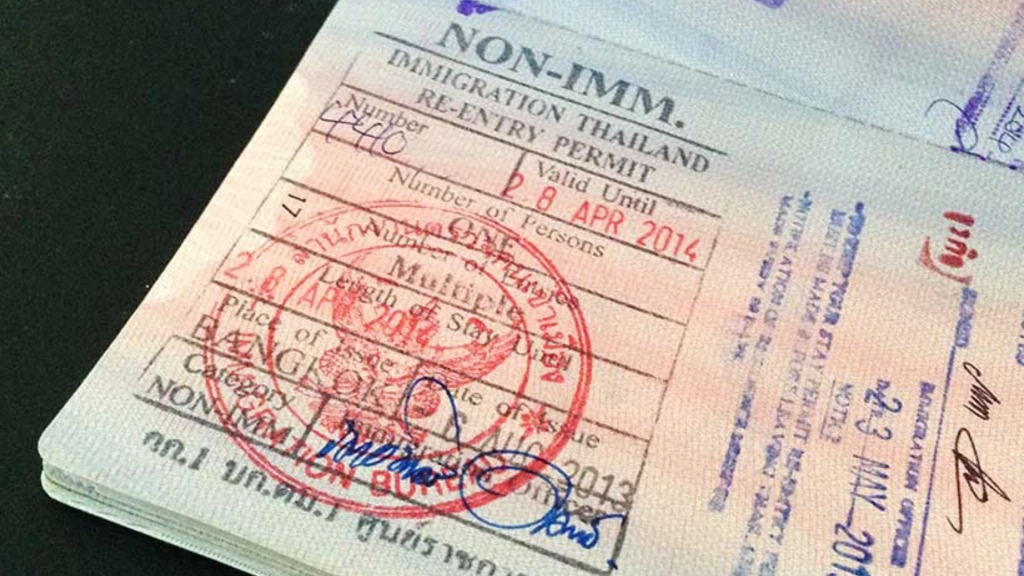
Planning to travel outside Thailand during your studies? A re-entry permit is vital before you leave. Your visa becomes invalid without it once you exit the country.
You can choose between two types of re-entry permits:
- Single Re-entry Permit: Lets you enter Thailand once (1,000 Baht) [232]
- Multiple Re-entry Permit: Gives unlimited entries during your visa validity (3,800 Baht) [232] [233]
Bring your passport, form TM.8, recent photos, and copies of relevant passport pages when applying for a re-entry permit [233]. You can apply at Immigration offices or international airport checkpoints on your departure day [233].
Your ED visa’s expiration date stays the same even with a re-entry permit. Plan your international trips carefully to avoid visa issues.
Legal Rules and Restrictions
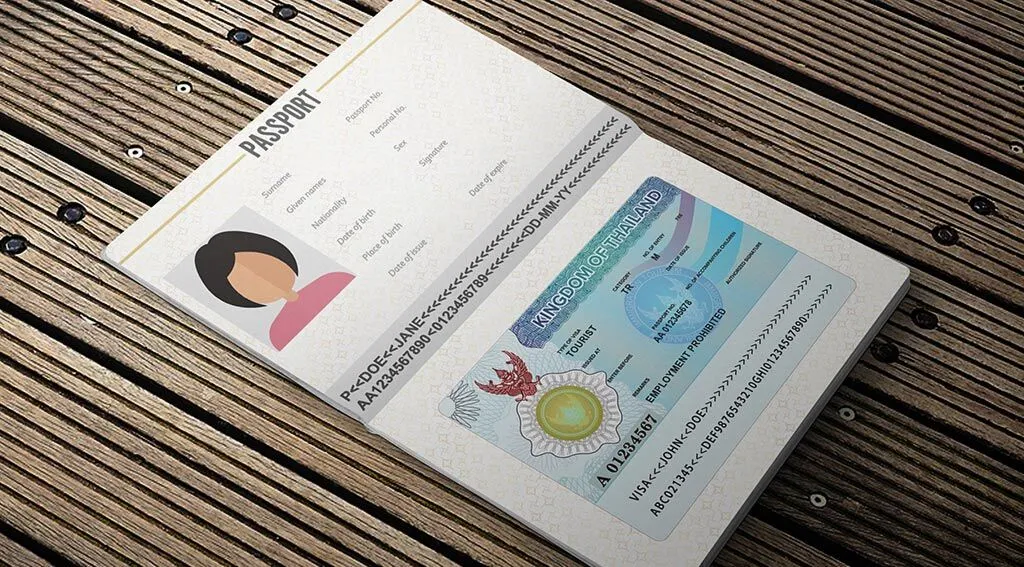
Legal boundaries of your Thai education visa are vital to retain valid status and avoid penalties. Thai authorities enforce strict regulations you must follow during your stay.
Work restrictions under the ED visa
You should know that education visa holders cannot legally work in Thailand under any circumstances. This rule applies to:
- Full or part-time employment with Thai companies
- Freelance work for clients (Thai or international)
- Teaching positions
- Any paid activities performed while in Thailand
Academic internships that are part of your official university curriculum and have received pre-approval from the Ministry of Education remain all but one of these restrictions. Internships lasting beyond three months need a special work permit (W.P. 3).
Monthly attendance reporting
Schools must track your enrollment status through mandatory electronic reporting to the Immigration Bureau. Most institutions require 80% attendance for each 90-day period so you can keep your visa. Your visa could face immediate cancelation if you don’t meet these requirements.
Long-term visa holders must report their address to immigration every 90 days. You can complete this reporting in person, by mail, or through an authorized agent with Power of Attorney.
Consequences of overstaying
Daily fines of 500 Baht apply when you overstay your visa, with a maximum penalty of 20,000 Baht. Beyond these financial penalties, overstaying more than 90 days results in deportation and entry bans:
- 90+ days overstay: 1-year re-entry ban
- 1+ year overstay: 3-year ban
- 3+ years overstay: 5-year ban
- 5+ years overstay: 10-year ban
Authorities impose harsher penalties if they catch you during an overstay—a 5-year ban for overstays under one year and a 10-year ban for longer overstays.
Switching to other visa types
You cannot directly convert your education visa to a work visa while staying in Thailand. Standard procedure requires you to:
- Cancel your current education visa
- Leave Thailand
- Apply for the new visa category at a Thai Embassy or Consulate abroad
Some immigration offices may allow changes from an education extension to a work extension in limited cases. This requires both your school and future employer to coordinate with immigration authorities.
Benefits of the Education Visa in Thailand
Getting an education visa in Thailand offers several unique advantages to international students and learners.
Long-term legal stay for study
The ED visa lets you stay in Thailand much longer than tourist visas. You can legally live in Thailand for up to one year, and you can renew it for more years. Students often combine Thai, English, and Japanese courses to stay in Thailand for years while they study. This visa makes it possible to maintain legal residency throughout your studies.
Cost-effective compared to other visas
The ED visa Thailand ranks among the most economical long-term visa options. You’ll pay just 2,000 baht as your original fee, plus 1,900 baht every few months for extensions. These rates offer great value for extended stays, especially compared to options like the Thailand Elite Visa that needs big investments.
Family visa options for minors
Foreign children can study in Thailand with special student visa arrangements. Parents or guardians can also get dependent visas when their children study in Thai schools. This allows families to stay together legally during the educational period.
Cultural immersion and travel flexibility
The non-immigrant education visa Thailand opens doors to rich cultural experiences. Students appreciate how this visa helps them connect meaningfully with locals and overcome language barriers. They also gain a complete understanding of Thai customs.
Conclusion
Thailand’s education visa is a great way to stay long-term while pursuing your educational goals. This visa costs just €70, making it a fantastic value compared to options like the Thailand Elite Visa. Many expats choose this path to advance their studies and experience Thai culture firsthand.
This piece walks you through everything from picking an accredited school to getting your documents ready and submitting your application. On top of that, it covers the significant steps to extend your visa and meet legal requirements. You need to follow attendance rules and understand work limitations to keep your education visa valid.
The right timing and preparation matter to extend your visa. You must maintain at least 80% attendance and check in with immigration every 90 days to stay legal. Missing these requirements can lead to penalties, fines, or deportation with re-entry bans.
The education visa gives you a unique experience to blend with the culture and grow personally, despite its strict rules. Families can stay together through dependent visas while their children study. You can also pick from a variety of educational paths, from language courses to university degrees.
Take time to think about your goals before you begin your trip to Thailand. Make sure they fit within the visa’s limits, especially about work restrictions. Getting approved takes patience and attention to detail, but living legally in Thailand while studying makes it worth the effort.
Thailand welcomes students worldwide with warmth and hospitality. Without doubt, studying in this vibrant Southeast Asian nation will change your life if you plan well and follow immigration rules.
FAQs
Q1. What are the basic requirements for obtaining an education visa in Thailand? To obtain an education visa in Thailand, you typically need a valid passport, completed visa application form, recent photos, acceptance letter from a recognized educational institution, proof of financial means, and payment of tuition fees. Additional documents may be required based on your specific program and nationality.
Q2. How much does an education visa for Thailand cost? The initial fee for an education visa in Thailand is approximately 2,000 Thai Baht (around €60). Extensions typically cost 1,900 Thai Baht. Compared to other long-term visa options, the education visa is one of the most cost-effective choices for extended stays in Thailand.
Q3. How long does the education visa application process take? The education visa application process usually takes between 45-90 days, depending on your nationality and how quickly you submit all required documents. Once approved, you’ll receive an initial 90-day visa, which can be extended for longer periods after arrival in Thailand.
Q4. Can I work while on an education visa in Thailand? No, holders of education visas are not permitted to work in Thailand. The only exception is for pre-approved academic internships that are part of your official university curriculum. Engaging in unauthorized work can result in visa cancelation and legal consequences.
Q5. What are the attendance requirements for maintaining an education visa? To maintain your education visa status, you must typically attend at least 80% of your classes during each 90-day period. Educational institutions are required to report your attendance to immigration authorities regularly. Failing to meet attendance requirements can lead to visa cancelation.


