
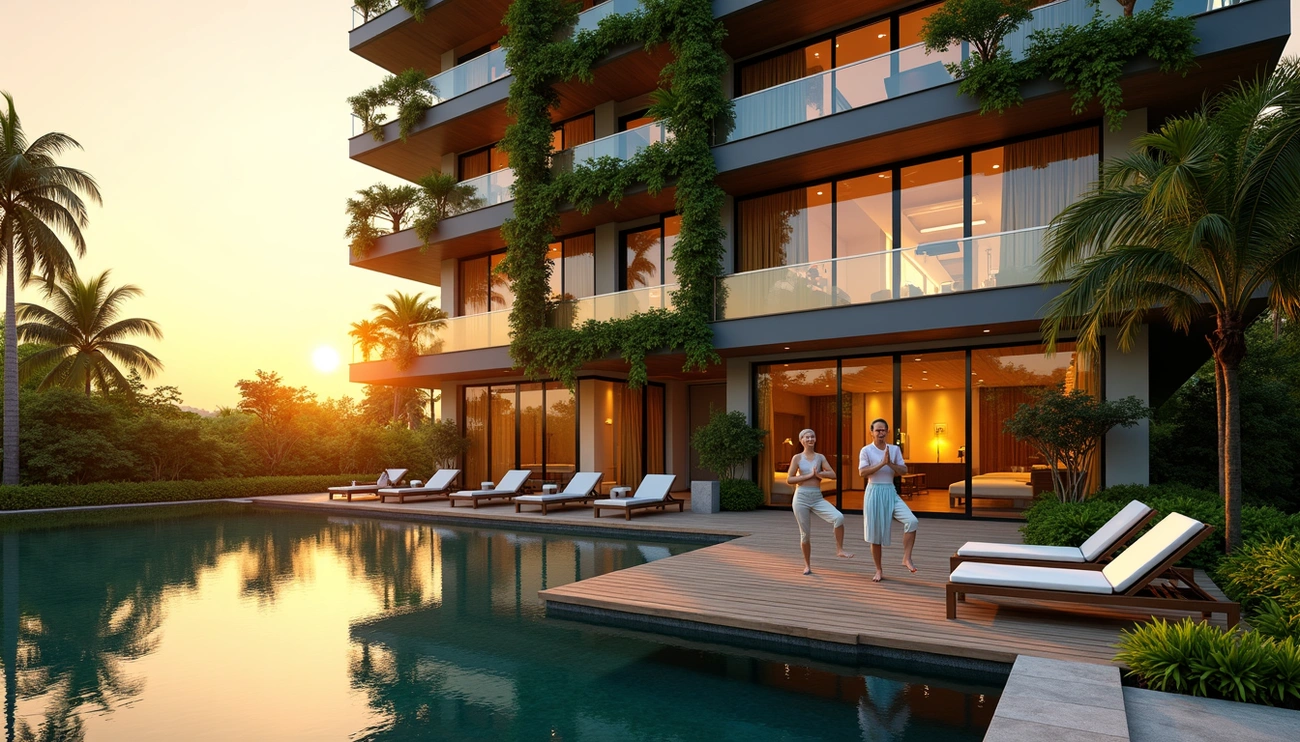
Wellness-focused real estate now dominates Thailand’s property investment scene. The global market reached US$398 billion (approx. THB 14 trillion) in 2022 and experts project it to hit US$580 billion by 2025. Thai homebuyers’ priorities have changed. A recent survey of 2,000 people reveals they now see wellness as “quality of life, good environment, and safety”.
This wellness trend creates a promising chance for foreign investors in Thailand’s property market. The country stands out as one of Southeast Asia’s most appealing real estate destinations. Groundbreaking projects like The Forestias showcase this transformation. This ecological residential project spans 636,800 square meters with a value close to $3.6 billion USD. The market keeps growing steadily. Recent data shows 41% of Thai residents aim to buy new homes within three years – up from 36% in 2024.
In this piece, we’ll look at how wellness properties alter Thailand’s real estate map. We’ll explore these developments’ unique features and show investors how to tap into this evolving market that promises strong returns ahead.
Global wellness trends shaping real estate
Global wellness trends are reshaping real estate and creating new chances for Thailand property investment enthusiasts to benefit from these market changes.
Aging populations and senior housing demand
We’re witnessing an unprecedented change in demographics worldwide. The number of people over 80 will grow 25% in just five years and double by 2035. Seniors will make up 33% of the US population by 2040. This demographic change has sparked a huge need for specialized housing.
Most seniors (95%) want to stay in their homes, but many eventually need supportive living spaces. Senior housing has bounced back strong after COVID-19. Occupancy rates jumped from 80% in 2021 to 85% today. The current building pace will only meet one-third of the THB 10327.09 billion needed in new construction by 2030.
Thailand property investment presents a great chance for foreigners, as the country becomes an affordable retirement spot with quality healthcare.
Post-pandemic focus on health and safety
Health and safety features have become essential building requirements since COVID-19. Tenants now need air filtration systems, UV air purification, and touchless technologies for entries, elevators, and restroom fixtures.
Buildings focused on resident wellbeing now seek WELL and Fitwel certifications to show their dedication to occupant health. On top of that, properties now include features that help with cleaning and sanitization.
This health-focused trend fits perfectly with Thailand’s wellness reputation and opens doors for developers who can blend these features into new projects.
Remote work and digital nomad lifestyle
The world has over 40 million remote workers, and more than 70 countries now offer digital nomad visa programs. These location-independent professionals are changing real estate markets everywhere.
Asian countries compete to attract this mobile workforce. Thailand’s Destination Thailand Visa (DTV) lets remote workers stay for five years with multiple 180-day entries. Cities with nomad visas have seen 10-20% more short-term rentals turn into long-term leases.
Digital nomads spent THB 15490.64 billion globally in 2024. Community-focused co-living spaces cater to this group, and the Asia-Pacific co-living market should grow 17.9% yearly through 2025.
Thailand property investors can benefit from this trend by providing flexible, well-connected living spaces with strong digital infrastructure.
Wellness economy growth beyond real estate
The global wellness economy has hit THB 256.74 trillion, with wellness real estate growing faster than any other segment. This sector has grown 19.5% yearly in the last five years, far ahead of traditional construction’s 5.5%.
The wellness real estate market reached THB 15077.56 billion in 2023 and should double to THB 37.87 trillion by 2029. It now makes up 3.3% of global annual construction output.
The market now includes affordable housing options and takes an integrated approach to mental, social, and environmental wellbeing, moving beyond physical wellness amenities.
Thailand continues to grow as a wellness destination. Smart investors who understand these global trends can spot chances that match these market forces.
Why Thailand is leading the wellness property shift
Thailand leads the booming wellness real estate sector globally with its unique advantages. Let’s look at what makes Thailand a pioneer in this transforming market.
Affordable, high-quality healthcare system
The life-blood of Thailand’s wellness property appeal is its healthcare excellence. The country ranks among the top medical tourism spots worldwide. Its healthcare system beats many Asian peers in quality and affordability. The numbers tell the story – a detailed private hospital check-up costs around THB 6,885, while you’d pay THB 34,424 or more in the US.
This healthcare edge makes a strong case for property investment in Thailand. World-class private hospitals feature English-speaking doctors and modern facilities. Public hospitals can get crowded but provide very affordable care. Private facilities deliver high-quality treatment and shorter wait times.
These advantages have helped wellness-focused residential developments with healthcare services thrive in Thailand. Buyers get both investment returns and lifestyle perks.
Strong expat and retiree base
Thailand draws expats, entrepreneurs, and retirees who want quality living at reasonable prices. Bangkok is one of the world’s most visited cities. Places like Chiang Mai, Phuket, and Hua Hin have become popular spots for long-stay foreigners.
This solid base of foreign residents creates steady demand for wellness-oriented properties. Many Asian retirees, especially from aging populations in developed markets like Singapore, turn to Thailand for affordable yet high-quality options.
Each retirement spot in Thailand offers something special. Culture enthusiasts love Chiang Mai. Luxury beach lovers choose Phuket. Families feel at home in relaxed Hua Hin. Koh Samui offers stunning beaches with wellness retreats. These areas have welcoming expat communities that run social events and activities to help newcomers settle in.
Government support and visa programs
Thai officials have rolled out forward-thinking policies to attract wellness-focused property buyers. The Long-Term Resident (LTR) Visa shows their steadfast dedication to this strategy with several perks:
- 10-year renewable visa (5+5 years)
- Fast-track service at international airports
- Permission to work in Thailand (digital work permit)
- 17% personal income tax for highly-skilled professionals
- Tax exemption for overseas income
The Thailand Privilege Residence (Elite Visa) program lets people stay up to 20 years with VIP immigration services and luxury facility access. Retirees aged 50+ can get the Non-Immigrant O-A visa for yearly stays with renewal options.
Officials want to bring in one million wealthy or talented foreign residents within five years. They’re also investing heavily in wellness infrastructure to make Thailand a wellness hub.
Competitive property prices
The most appealing aspect of Thai property investment is its value compared to other Asian markets. Prime condos in Bangkok cost THB 206,542–245,000 per square meter. Wellness residences outside central areas offer more space and integrated services at lower prices.
Thailand’s wellness real estate gives you bigger living spaces in natural settings with detailed services at attractive prices. To cite an instance, see retirement-focused properties in resort areas like Phuket, Koh Samui, or Hua Hin – available for THB 7-15 million. These prices offer great value compared to similar Western properties.
The medical tourism market exceeded THB 14,905 million in 2024. It should grow 15% yearly to reach THB 44.75 billion by 2035. The domestic medical device market will grow 7% annually, while exports should rise by 7.5%.
These four strengths – affordable healthcare, thriving expat communities, helpful government policies, and competitive pricing – explain why Thailand leads the wellness property transformation. This creates excellent opportunities for investors and residents alike.

Arom Wongamat Condo For Sale
- ฿13,480,000
- Bed: 1
- Bath: 1
- 47.85 Sqm
- Condo

Empire Tower Condo for Sale Pattaya
- ฿7,690,000
- Beds: 2
- Baths: 2
- 63.08 Sqm
- Condo

Atlantis Condo Resort Condo
- ฿4,400,000
- Beds: 2
- Baths: 2
- 63.71 Sqm
- Condo

New Nordic Trend 3 Studio Condo for Sale in Pratumnak (Phatumnak) – City View | Foreign Name
- ฿1,060,000
- Beds: Studio
- 26 Sqm
- Condo

What makes a wellness residence different
Wellness residences have altered the map of Thailand’s property landscape. They are nowhere near standard homes with a few health-focused amenities. These innovative living spaces blend multiple dimensions of wellbeing into their core design and operations.
Integrated healthcare and preventive services
Unlike conventional properties, wellness residences put prevention first instead of following the traditional “disease model” that only treats illnesses after they appear. These developments combine primary care and public health functions to create complete health services that improve residents’ overall wellbeing and quality of life.
On-site clinics, routine health check-ins, and medication management services show this integration in action. Residents enjoy uninterrupted communication among healthcare providers. Care coordinators work with physicians, nurses, therapists, and specialists to create individual-specific care plans.
These communities build care networks that connect internal providers with external specialists. This ensures residents receive timely, connected support. Foreign investors who think over retirement options in Thailand will find this integration reduces the hassle of off-site appointments. It helps residents tackle minor health issues before they worsen.
Green spaces and biophilic design
Biophilic design—connecting people with nature in built environments—is the life-blood of wellness architecture. These residences include natural elements like large windows, indoor gardens, water features, and organic materials. Such features create environments that support mental and physical health.
Research confirms these design elements work well. Studies show exposure to natural daylight cuts hospital stay lengths by 26-41% and improves mental function by 10-15%. This translates to real value for Thailand property investments as biophilic spaces reduce stress, boost creativity, and improve overall wellbeing.
These residences feature landscaped gardens, walking paths, and energy-efficient designs that deliver a lifestyle based on balance. Such elements help residents feel more relaxed at home, particularly in urban environments where nature exposure remains limited.
Community-building and social wellness
Social isolation stands as one of the biggest challenges for expats and retirees. Wellness residences tackle this through built-in community features that encourage interaction and belonging. These communities support social wellness through:
- Dedicated spaces for fitness classes and group activities
- Community halls and event spaces for gatherings
- Workshops and cultural programming
- Shared dining areas and teaching kitchens
This emphasis on social connection brings measurable benefits—45% of residents in wellness-focused communities report that community programs substantially increased their overall life satisfaction. Foreign property investors in Thailand can expect higher tenant satisfaction and longer rental stays.
Smart home and energy-efficient features
Wellness residences make use of information to actively improve resident wellbeing. Smart thermostats learn occupants’ schedules to enhance comfort while reducing energy costs. The indoor air quality (IAQ) monitors detect harmful elements like radon, carbon dioxide, volatile organic compounds, and humidity.
Advanced ventilation systems and air purifiers create environments with fewer contaminants, which reduces respiratory issues. Water filtration systems ensure cleaner drinking water and minimize exposure to harmful substances.
Smart lighting systems adjust according to the time of day. This helps regulate circadian rhythms and improves sleep quality. These intelligent features monitor and adjust various aspects of the home environment to support health outcomes while optimizing resource use.
The combination of these four elements—healthcare services, biophilic design, community spaces, and smart technology—sets wellness residences apart from conventional properties. Savvy investors in Thailand’s property market who understand these differentiators gain insight into this growing real estate segment’s long-term value proposition.
Case study: Jin Wellbeing County
Jin Wellbeing County shows how wellness real estate principles work in Thailand. This pioneering project sits in Pathum Thani just outside Bangkok. It’s Thailand’s first integrated wellness residence and sets new standards for property investment opportunities in the wellness sector.
Healthcare integration and aging-in-place model
Jin Wellbeing County takes healthcare to a new level with its complete aging-in-place solution. The project has preventive healthcare services, on-site clinics, and a full continuum-of-care model. Residents can move naturally from independent living to assisted living when needed—a key feature that appeals to health-conscious expats and retirees.
Thonburi Healthcare Group’s 40 years of medical excellence forms the project’s healthcare foundation. Residents get:
- 24-hour medical services from professional doctors and nurses
- Emergency nursing with 4-minute response time
- Rehabilitation programs for stroke or paralysis
- Preventive care and wellness monitoring
Next door, Thonburi Burana Hospital (51 beds) focuses on integrated elderly care. The hospital offers everything from outpatient services to specialized treatment for dementia, cardiovascular conditions, and musculoskeletal issues.
Sustainable design and green living
Biophilic principles shape Jin Wellbeing County’s design. Green, open spaces cover nearly half the grounds—over 14 rai (approximately 22,400 square meters). This is a big deal as it means that the project’s 40% green space both on-ground and on-structure beats the standard 30% requirement.
The buildings feature green architecture with energy-efficient lighting, natural ventilation, and water recycling systems. Building placement along an east-west axis maximizes natural light and reduces the need for artificial cooling.
The project’s green features include:
- A “creek” water management system for wet season flooding
- “Bioswales” that collect runoff water from outer areas
- A “Biopond” for water retention and secondary treatment
- Gardens with diverse plants creating a forest-like setting
Built-in community and lifestyle programming
Life at Jin Wellbeing County goes beyond being neighbors—residents share a lifestyle. The project helps solve one of the biggest challenges expats and retirees face: social isolation.
A “Multi-generation living” concept brings together independent living, family homes, and assisted living to create community spirit. Walking paths feature strategic gathering spots that lead to natural interactions between residents.
The community buzzes with fitness classes, creative workshops, community gardening, and group dining. These social activities provide what psychologists call “social nourishment”—vital support and connection for mental health.
Residents can join over 20 wellness activities:
- Therapeutic gardens that stimulate all five senses
- Reflexology paths with various stone textures
- Three different physical therapy trails
- Group exercise areas near the wellness institute
Location and accessibility advantages
Jin Wellbeing County strikes a perfect balance between peace and city convenience. The Pathum Thani location lets residents enjoy green living while staying close to Bangkok.
Major roads surround the project, including Phahonyothin Road and Vibhavadi Rangsit Road, with the Utraphimuk Tollway nearby. Don Mueang International Airport sits just 13.8 kilometers away, and public transport options include the SRT Red Line Extension (7.6 km from Rangsit Station).
This prime spot boosts long-term value for investors. Residents enjoy extensive gardens and wellness facilities in a peaceful setting without giving up city perks. Future Park Rangsit, Major Rangsit, Zeer Rangsit, and entertainment spots like Dream World add to the area’s appeal.
Investment benefits of wellness properties
Wellness real estate presents remarkable financial advantages that go beyond standard developments for those looking at property investment opportunities in Thailand. The numbers paint a clear picture of this emerging asset class.
Higher rental yields and longer tenant stays
Wellness properties consistently bring in 4.5–7.5% higher rental rates per square foot than conventional spaces. Tenants are willing to pay this premium for environments that improve their wellbeing. These properties enjoy better occupancy stability because wellness-focused tenants typically sign longer leases. Expats and retirees who choose wellness communities tend to stay put since their living environment includes healthcare and lifestyle needs. This creates steady income streams—a vital factor for investors who prefer reliable cash flow over speculative gains.
Stronger resale value over time
The resale potential stands out, with wellness homes selling for 10–25% higher in major markets. Traditional properties can’t match the lasting value that wellness features create. Buyers recognize the long-term worth of properties with highly-rated amenities. The wellness real estate market grows at an impressive 19.5% annually (2019-2024), and this value difference will likely increase.
Stability from silver economy demand
The “silver economy”—industries that serve older adults—brings unique stability to wellness property investments. The United Nations projects that people aged 60+ will outnumber those under 15 by 2050. These demographic trends favor wellness-focused housing. Older adults increasingly look for accommodations that support healthy aging. This sustained demand protects investors from market swings, especially since supply can’t keep up with the growing senior population.
Appeal to multiple buyer demographics
Wellness properties draw diverse buyers beyond retirees. About 72% of all homebuyers now want wellness features like advanced air purification, water filtration, and fitness spaces. Corporate buyers make up another big market segment, with 56% of employers choosing wellness-integrated office environments. This wide appeal reduces investment risk through market diversification.
These advantages build a strong investment case for foreigners interested in Thai property investment. CBRE Thailand reports show developers changing toward mixed-use and wellness-oriented projects to meet new buyer demands. Properties that follow wellness principles are set to perform better than conventional developments in both appreciation potential and income stability through 2025-2026.
2025–2026 outlook for property investment in Thailand
Thailand’s real estate market is experiencing remarkable changes as investors focus on health-centered developments throughout the country. The country now stands among the top 10 wellness economies in Asia-Pacific, with its market value reaching THB 1.4 trillion as of 2023.
A move toward mixed-use and wellness projects
Wellness-integrated developments will surge at an unprecedented rate over the next two years. Major projects lined up for 2025-2026 include Clinique La Prairie’s first Southeast Asian health resort at Tri Vananda in Phuket, Tiva Ao Makham Resort in Phuket (September 2025), and Fivelements in Koh Samui (mid-2026). Central Pattana plans to roll out massive mixed-use developments nationwide. The company will launch “Central Park” in 2025, followed by “The Central” mega-project in 2026 that will create a new CBD in Bangkok. Developers are embracing the WELL Building Standard, with three projects spanning almost 6 million square feet actively seeking certification.
Infrastructure upgrades boost suburban value
Property hotspots are emerging in outlying areas thanks to strategic infrastructure investments. Airport expansions at Suvarnabhumi and Phuket International have energized surrounding markets. Reduced commute times from new expressways connecting to suburban Bangkok have sparked a surge in developments. Bangkok’s metro expansion makes suburban properties more appealing. The Orange Line (Thailand Cultural Center to Minburi) and Dark Red Line extension let people live farther from their workplaces.
Foreign investor interest and long-term visas
Government initiatives continue to draw international property buyers. The Long-Term Resident visa program gives 10-year renewable stays, fast-track immigration, work permits, and tax advantages. The country wants to attract one million wealthy foreign residents within five years. Four visa categories target different groups: Wealthy Global Citizens, Wealthy Pensioners, Work-from-Thailand Professionals, and Highly-skilled Professionals. These policies have increased foreign interest in properties, particularly near infrastructure projects and in coastal cities.
How to assess a wellness property for ROI
Wellness properties need different value metrics for assessment. These resorts generate 35-450% higher RevPAR compared to luxury hotels in similar locations. They keep higher low-season occupancy rates and attract more repeat guests (30-55%), which creates stable revenue streams. Wellness tourists usually stay 3-10 days and spend 61% more than average international visitors. They generate about 35% of revenue from wellness activities. Properties that combine wellness principles will likely outperform traditional developments in both appreciation potential and income stability through 2025-2026.
Conclusion
Thailand’s property investment market is at a turning point, as wellness-focused real estate emerges as the key trend for 2025 and beyond. The sector shows incredible promise, growing from US$398 billion globally in 2022 to an expected US$580 billion by 2025. These wellness properties outperform traditional developments with 4.5-7.5% higher rental rates and 10-25% better resale values.
Thailand has several unique advantages in this market. The country’s combination of affordable quality healthcare, thriving expat communities, attractive visa incentives, and competitive property prices makes it a leader in wellness real estate. Jin Wellbeing County exemplifies how these elements create living spaces that boost residents’ physical, mental, and social wellbeing.
Major developments will drive rapid growth across the country in the next two years. Mixed-use wellness projects will become the norm rather than the exception. These projects appeal to both local and international buyers looking for health-optimized living spaces. New investment hotspots are emerging beyond city centers thanks to strategic infrastructure investments that raise suburban property values.
The Thai government aims to attract one million wealthy residents through targeted visa programs. This population change will drive the demand for wellness-focused properties up, especially those with healthcare integration, biophilic design, community spaces, and smart home features.
Real estate investment always comes with risks, but wellness properties offer unique stability. They appeal to various buyer groups and align with lasting trends like aging populations and health awareness. Investors who recognize this fundamental change early will likely see higher returns than those who stick to conventional properties.
The wellness revolution marks a complete change in how we value real estate. Properties that improve residents’ health outcomes will command higher prices as buyers prioritize wellbeing alongside location and size. Thailand’s wellness heritage and strong government support make it the perfect place to tap into this global shift toward healthier living spaces.


