Healthcare in Bangkok: Quality, Access, and Affordability
Healthcare is a vital part of planning retirement in Thailand. Bangkok’s medical facilities have earned worldwide recognition. They are known for exceptional quality, are easily available, and offer budget-friendly options that attract many foreign retirees.
Top hospitals and international standards
Bangkok’s world-class medical facilities match and often outperform many Western countries. Bumrungrad International Hospital ranks 100th among the World’s Best Hospitals 2025 by Newsweek and Statista. The hospital has stayed Thailand’s #1 medical facility for five straight years. This success explains Thailand’s position as a leading destination for world-class healthcare.
Bangkok’s medical excellence comes from its strict international standards. Bumrungrad became Asia’s first hospital to get Joint Commission International (JCI) accreditation. Bangkok Hospital Headquarters earned its 6th straight JCI accreditation from 2023-2026. These certifications mean retirees get care that follows global protocols to boost health outcomes and quality of life.
The healthcare teams at these facilities often train internationally. To name just one example, Samitivej Hospital’s physicians and nurses have decades of combined experience in Thailand and abroad. This means retirees get care from experts who know global best practices.
Cost comparison with Western countries
The most attractive part of healthcare for potential retirees in Thailand is the huge cost savings. Medical procedures here cost 50-80% less than similar treatments in Europe or the United States. Here’s what you can expect:
- An MRI scan costs about 6,540 THB in Thailand versus 89,880 THB in the U.S.
- A private hospital stay ranges from 3,442-6,885 THB per night, compared to 34,424-68,847 THB in Western countries
- Heart bypass surgery that costs 3,442,365 THB in the U.S. costs just 344,236 THB in Thailand, including airfare and accommodation
Regular dental care and doctor visits cost 50-75% less than Western countries. This lower cost doesn’t mean lower quality. Many Thai doctors train abroad in countries with advanced medical systems and follow international standards.
Health insurance options for retirees
Foreign retirees in Bangkok need to understand health insurance requirements. Since October 31, 2019, non-immigrant O-A visa applicants must have valid health insurance. The minimum coverage should be 40,000 THB for outpatient care and 400,000 THB for inpatient treatment.
Retirees can choose from several insurance options:
- Local Thai insurance for seniors starts at about 2,065 THB monthly for basic coverage
- International insurance (like Cigna or Bupa) provides wider coverage including emergency evacuation, with higher premiums around 6,885-13,769 THB monthly for retirees over 65
- A 67-year-old expat might pay around 189,330 THB yearly for detailed worldwide coverage (excluding the U.S.)
Many 80-year-old retirees get private medical insurance through companies or brokers. This gives them access to private hospitals with modern equipment and English-speaking staff. Companies like Pacific Cross, Luma, AIA, Thaivivat, and April International offer competitive healthcare policies.
Pacific Cross provides health insurance specifically for older retirees, unlike many local insurers that stop coverage at age 60. This makes Thailand retirement possible whatever your age.
Visa Options for Retirement in Bangkok
A successful retirement plan in Thailand starts with getting the right visa. Bangkok gives retirees several visa options, and each comes with its own set of benefits and requirements.
Non-Immigrant O-A and O-X visas
The Non-Immigrant O-A (Long Stay) visa is a popular choice for retirees. It lets foreigners who are 50 and older stay in Thailand for up to one year. You’ll need either 800,000 THB in a Thai bank account for at least three months, a monthly income of 65,000 THB, or a mix of both that adds up to 800,000 THB.
The Non-Immigrant O-X visa is a better choice if you want to stay longer. It gives you 10 years – first 5 years plus a 5-year extension. The financial requirements are steeper, and it’s only open to people from 14 countries including Australia, Canada, Denmark, Finland, France, Germany, Italy, Japan, Netherlands, Norway, Sweden, Switzerland, UK, and USA. You must keep either 3 million THB in a Thai bank or have 1.8 million THB plus yearly earnings of 1.2 million THB.
These visas don’t allow you to work, and you need health insurance that covers at least 40,000 THB for outpatient and 400,000 THB for inpatient care.
Thailand Privilege (Elite) Visa
The Thailand Privilege Visa (previously Thailand Elite) is becoming a go-to choice for retirees who want convenience. Members can stay for 5 to 20 years without dealing with 90-day reporting, and they get special treatment at immigration.
Here’s what each membership tier offers:
- Bronze (5 years): 650,000 THB with basic VIP services
- Gold (5 years): 900,000 THB with 20 annual privilege points
- Platinum (10 years): 1.5 million THB with 35 annual privilege points
- Diamond (15 years): 2.5 million THB with exclusive benefits
- Reserve (20 years): 5 million THB, limited to 100 members each year
You don’t need health insurance with this visa, but it’s still a good idea to have it.
LTR Visa for affluent retirees
The Long-Term Resident (LTR) Visa is a new 10-year option that’s perfect for wealthy retirees. It’s designed for pensioners over 50 who have significant financial resources, and it comes with easier immigration procedures and possible tax advantages.
To get this visa, you need either passive income of 80,000 USD per year or 40,000 USD in yearly passive income plus 250,000 USD invested in Thai government bonds, property, or companies.
Financial and age requirements
You need to be at least 50 years old for all these visas. The money requirements are different for each one:
- O-A Visa: Starts at 800,000 THB deposit or 65,000 THB monthly income
- O-X Visa: Needs 3 million THB
- Thailand Privilege: Starts at 650,000 THB for 5 years
- LTR Visa: Needs 80,000 USD yearly income or a combined approach
You’ll need health insurance for most visas except Thailand Privilege[221]. The O-A visa requires 3,000,000 THB coverage for COVID-19, while the LTR visa asks for 50,000 USD in coverage.
Your choice should depend on your finances, how long you want to stay, and how much paperwork you’re willing to handle. Each visa gives you a legitimate way to retire in Thailand with different levels of convenience and flexibility.
Lifestyle Benefits of Retiring in Bangkok
Life quality in Bangkok makes retirement increasingly attractive, beyond just the money aspect. The city blends traditional Thai charm with modern comforts you won’t easily find elsewhere in Southeast Asia.
Entertainment, dining, and cultural activities
Bangkok’s rich cultural heritage creates endless adventures for retirees. You’ll find temples, museums, and traditional performances that showcase Thailand’s cultural roots. The Sala Chalermkrung Royal Theater lets retirees experience Thai classical dance forms like Khon and Lakhon.
Food stands out as a major draw here. Bangkok serves up everything from bustling street markets to high-end dining spots that fit any budget. A street food meal costs just ฿30-60, and restaurants range from local spots to international venues. The massive Chatuchak Weekend Market houses over 15,000 stalls packed with handmade crafts and local treats.
The city is rife with wellness activities:
- Traditional Thai massages that work on circulation and pressure points
- Yoga and meditation classes
- Public and private parks that welcome morning exercise
Public transport and walkability
Getting around Bangkok is surprisingly easy. The BTS Skytrain and MRT subway offer clean, cool rides throughout central areas. Seniors aged 60+ get great discounts and sometimes ride free during festivals. Thai seniors enjoy 50% off BTS fares on weekends and off-peak hours.
Cars used to rule Bangkok’s streets, but that’s changing. Projects like “Walkable Cities: GoodWalk Thailand” revolutionize areas into pedestrian zones. Sukhumvit, Phra Nakhon, and Chinatown rank as the most walkable neighborhoods.
Safety and cleanliness in urban areas
Bangkok stays safer than many major cities. Violent crime rarely happens, though tourist scams pop up now and then. The city buzzes with life into the evening, and popular spots like Chinatown and Asiatique remain safe after dark.
Thai laws keep public spaces clean. These rules make sure roads and businesses maintain good sanitation standards. On top of that, hospitals and hotels follow strict hygiene protocols that benefit everyone living there.
Financial Planning and Tax Considerations
Smart financial planning helps create a rewarding retirement experience in Thailand. Your retirement funds grow better and tax burdens stay lower when you understand everything in finance.
Using foreign pensions in Thailand
Thailand uses a remittance tax system that only taxes money brought into the country. Your overseas employment pensions fall under Section 40(1) of the Revenue Code as assessable income. You won’t pay taxes on foreign pension income earned before 2024 if you keep it overseas. This makes the timing of your transfers crucial.
Some pensions get special treatment. Thanks to the Double Taxation Agreement, US Social Security benefits stay tax-free in Thailand. Canadian state pensions like Canada Pension Plan or Old Age Security follow similar rules – Canada taxes them exclusively.
Banking and money transfers
A local bank account makes managing your retirement finances in Thailand much easier. Bangkok Bank, Kasikorn Bank, and UOB welcome expats with open arms. You’ll need your passport with visa and a residence certificate from local immigration to open an account.
Bangkok Bank’s New York and London branches are a great way to get regular pension transfers at lower costs. You might also find better deals through Wise and Revolut. These specialists often beat traditional banks with lower fees and better exchange rates.
Tax advantages for foreign retirees
The Thai tax structure benefits retirees since it only taxes income earned inside Thailand. Retirement visa holders can’t legally earn money within Thailand. This creates a natural tax advantage. The LTR Visa offers even more perks – it keeps your foreign-sourced income free from Thai tax under specific conditions.
Conclusion
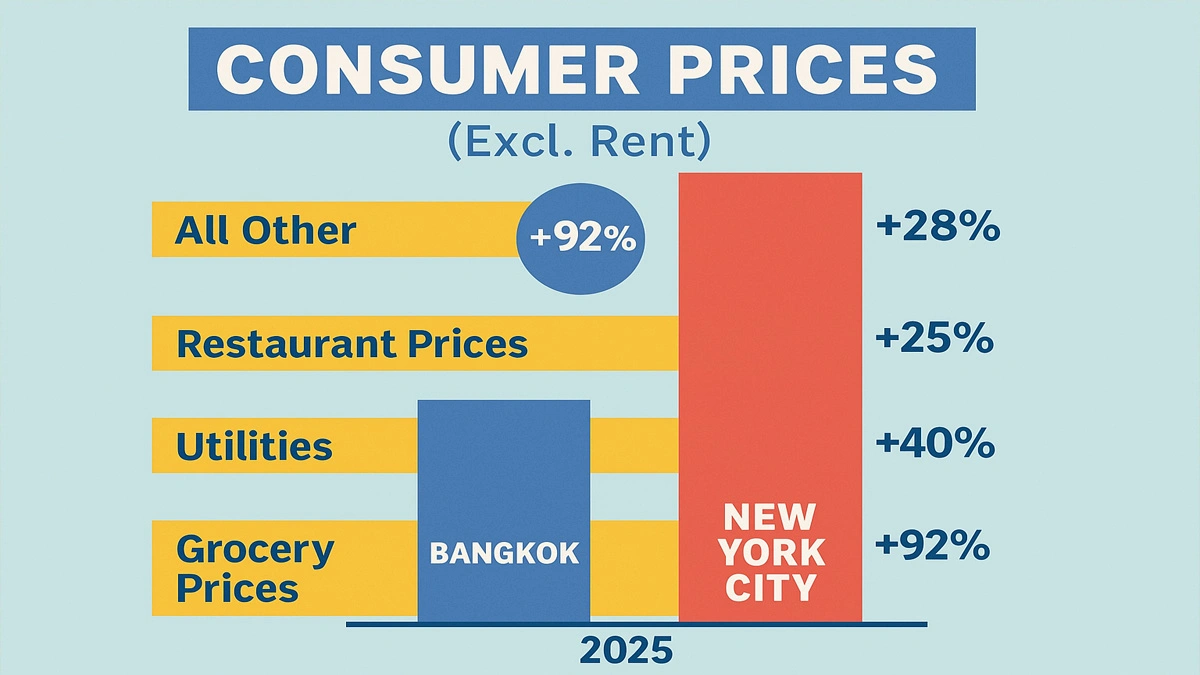
Bangkok stands out as a retirement paradise that combines affordability with quality of life in ways other Asian cities can’t match. Our research shows Bangkok offers huge cost savings compared to Western countries. The city also has better infrastructure than other Asian capitals. The healthcare system is exceptional, with top-tier facilities charging 50-80% less than Western prices. On top of that, retirees can choose from various visa options. These range from the standard Non-Immigrant O-A visa to the exclusive Thailand Privilege program.
The numbers tell a compelling story. Your retirement savings go substantially further in Bangkok compared to Western countries or other popular Asian retirement spots. The city costs more than Ho Chi Minh or Kuala Lumpur, but the superior amenities, healthcare access, and lifestyle make it worth every penny.
Bangkok keeps you engaged and excited. The city buzzes with culture, food options, and convenient public transport. Retirees don’t just survive here – they thrive. Strong expat communities help newcomers build social connections quickly and feel at home.
Bangkok strikes the perfect balance between familiar comforts and new adventures. The city delivers everything – from affordable luxury to quality healthcare and rich cultural experiences. As we look toward 2026, Bangkok will without doubt cement its place as Asia’s top retirement destination. It’s perfect for foreigners who want to stretch their savings while enjoying an exceptional quality of life in their golden years.