
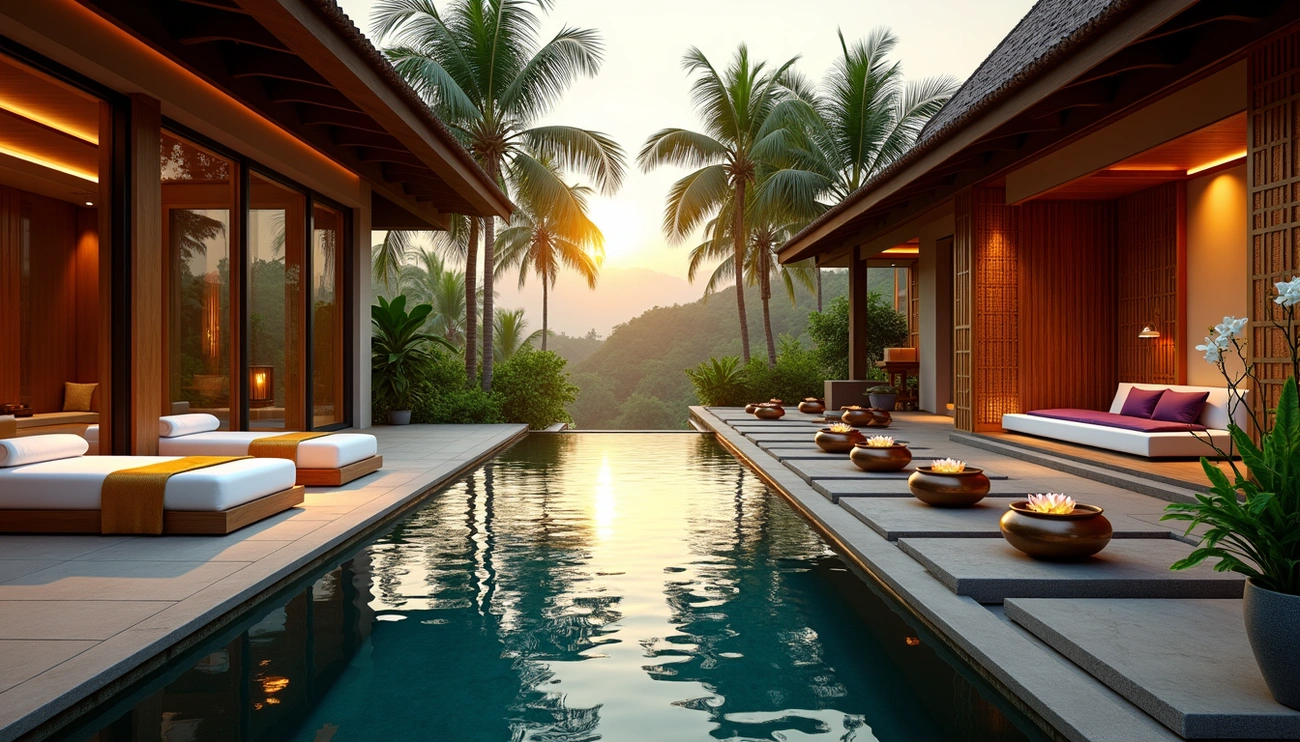
The Thai spa experience is part of a thriving wellness tourism sector. This sector now represents 7.8% of all global trips, and wellness travelers spend much more than regular tourists. Thailand plans to leverage this trend with an ambitious $2B luxury spa tourism initiative to revolutionize the country into a global wellness hub.
The Thai government’s commitment shows in their 4.5-billion-Baht budget approval. This funding will support 22 strategic initiatives to reshape tourism by 2026. Your experience at a Thai spa massage or royal Thai massage reflects Thailand’s broader vision. The country emphasizes quality over quantity and focuses on value, environmentally responsible practices, and authentic cultural identity. This transformation especially targets high-spending tourists in niche markets. The goal is to deliver premium Thai massage experiences that combine traditional practices with modern wellness approaches.
Thailand Launches $2B Spa Tourism Plan to Boost Wellness Sector
Thailand has laid out a complete 10-year strategy (2025-2034) to become a global wellness and medical service hub. The country plans to invest $2 billion in this initiative. The government wants to reshape the Thai spa industry into a major economic force that will drive future growth.
Government reveals strategy at national tourism forum
The Public Health Ministry will allocate 509.9 million baht in the 2026 budget to create wellness hubs in Thailand’s border provinces. This funding supports a broader strategy to develop specialized medical hubs that offer innovative services and better healthcare access to locals and international visitors.
Deputy Public Health Minister Somsak Thepsutin says this plan matches the Prime Minister’s vision to make Thailand a leading wellness hub that can generate annual revenue of 690 billion baht. The national committee working on this strategy wants to:
- Create many job opportunities in the wellness sector
- Boost skills development for wellness industry personnel
- Raise public health standards and reduce healthcare gaps
- Generate revenue from foreign patients, particularly from Malaysia, Laos, Cambodia, and Myanmar
“This initiative aims to enhance Thailand’s position as a wellness and medical hub, attract international patients, and boost cross-border healthcare trade,” explained Jirapong Songwatcharaporn, deputy spokesman for the Public Health Ministry.
Plan aims to position Thailand as global wellness hub
Thailand’s health and wellness tourism industry generated over 424.79 billion baht in 2023, showing an impressive 119.5% year-on-year growth. The country now has 2,189 wellness centers, and this number will grow as investments continue.
Thailand expects 92,813 wellness tourism-related businesses by 2026, generating about 670 billion baht in total revenue. The strategy includes five key pillars:
- Wellness Hub
- Medical Service Hub
- Academic Hub
- Product Hub
- Health Convention and Exhibition Hub
The Global Wellness Institute reports that Thailand’s wellness economy grew by 28.4% between 2022-2023, reaching $40.54 billion (about 1.4 trillion baht). Wellness tourism grew by 119.5%, reaching approximately 415 billion baht. Thailand now ranks as the second-fastest-growing wellness tourism destination globally, right after China.
Monthaka Teerachaisakul, director of the Department of Thai Traditional and Alternative Medicine’s Division of Herb Economics, says the government promotes modern wellness trends to boost the economy while highlighting each region’s unique attractions.
“Thailand enjoys a strong potential in health and wellness tourism, which also acts as a global communication platform to promote Thailand’s health-focused soft power strategy. We welcome travelers from both home and abroad to explore our great and diversified health experiences,” she noted.
The strategy combines Thailand’s natural resources, local wisdom, and warm hospitality with modern Thai spa massage techniques. Thailand wants to create unique wellness destinations that appeal to health-conscious international travelers by improving traditional Thai massage offerings and developing royal Thai spa experiences.
The government will keep investing in wellness infrastructure throughout the country. Future phases will get additional budget support to grow and improve the wellness hub network. This integrated approach helps Thailand compete with other international wellness destinations while building on its traditional healing practices.

2 Bedroom Condo in Wongamat Pattay for Sale
- ฿4,500,000
- Beds: 2
- Bath: 1
- 60 Sqm
- Condo

Luxury Villa in Mabprachan Pattaya for Sale
- ฿16,900,000
- Beds: 4
- Baths: 6
- 378 Sqm
- Pool Villa

1 Bedroom Cozy Beach Sea View Condo for Sale
- ฿4,520,000
- Bed: 1
- Bath: 1
- 69.51 Sqm
- Condo

2 Bedroom Atlantis Condo Resort for Sale
- ฿3,990,000
- Beds: 2
- Baths: 2
- 72.88 Sqm
- Condo

Experts Recommend Redesigning Thai Spa Experience
The Thai spa industry needs a complete makeover to stay competitive in the global wellness market. Industry experts want the sector to go beyond just massage services. Thai Spa Association’s President Sunai Wachirawarakarn leads this change and supports a complete approach to wellness tourism.
Sunai Wachirawarakarn wants Thai spas to offer more than just massages
Sunai believes Thai spas should grow beyond their roots. “Wellness is not just about massage. It’s about anything that can improve wellbeing,” he says. He sees chances to create spaces where visitors can enjoy healthy Thai food and experience Thailand’s famous hospitality.
His plans include using Thailand’s cultural strengths that rank high globally. Thai food stands at sixth place worldwide, while Thai hospitality (the ‘Thai smile’) ranks fourth. These assets are the foundations of new spa experiences.
“So why don’t we use this soft power to our advantage? We already have these assets, but we just need to redesign how we present them,” Sunai explains. He suggests businesses should offer more than simple services and create complete wellness packages that attract big spenders.
This change matches growing trends in wellness tourism. These trips make up 7.8% of all global travel, and wellness travelers spend more than regular tourists. The Thai Spa Association helps guide this development, pushing the industry toward all-encompassing wellness destinations.
Thai spa massage industry must create new business models
Sunai suggests a big change in how spas work. “We don’t need a human-based revenue-generating business model anymore. We need something that generates revenue from the facility itself,” he states. This approach would help businesses make better use of Thailand’s natural spaces and resources.
Sunai looks at international standards Thailand should follow:
- Singapore’s wellness facilities that locals and tourists can use
- Dubai’s business-minded approach to wellness facility growth
- Italy’s big spa facilities with huge hydrotherapy pools
These examples inspire his idea for Thailand to build spa facilities like Disneyland. Visitors could enjoy fun activities while getting wellness benefits. “I am confident that in every city, whenever we have this kind of space, we can make it more creative. It should not just focus on physical wellbeing, but also mental wellbeing,” he adds.
Industry experts say Thai operators should vary their offerings through:
- Better service quality
- Long-stay packages and multi-day retreat programs
- Complete experiences that mix spa treatments, nutrition, accommodation, fitness, and medical services
Thai spa concepts have started to change. Luxury hotel spas now turn into full wellness destinations through mutually beneficial alliances. BDMS and Sri Panwa work together to mix medical knowledge with hospitality excellence to raise Thailand’s wellness standards.
President Sunai Wachirawarakarn says growing domestic wellness tourism will help businesses survive global crises. Right now, Thai customers make up only 20% of clients, while foreign visitors account for 80%. More local customers would help during international travel problems.
The future Thai spa industry must welcome new technology, biohacking, and sustainability. Services need to help aging populations through customized health programs. Artificial intelligence, diagnostics, assessments, and customized preventive health approaches will meet younger generations’ needs.
TAT Promotes Wellness Infrastructure Over Human-Based Services
The Tourism Authority of Thailand (TAT) leads a major change in the country’s wellness strategy. Their new approach prioritizes infrastructure development over traditional human-delivered services. They want to create immersive wellness destinations that generate higher revenue and use Thailand’s natural resources better.
Proposal for Disneyland-style spa facilities
The Thai Spa Association looks at global entertainment destinations and proposes large-scale, immersive wellness complexes similar to theme parks. Sunai Wachirawarakarn, President of the Thai Spa Association, sees facilities where visitors can enjoy entertainment and complete wellbeing services in one place.
“Thailand could develop spa facilities in the style of Disneyland, where visitors not only enjoy entertainment and leisure but also benefit from wellbeing services,” Sunai explained at a recent industry forum. This concept marks a significant change from traditional thai spa operations that focus on individual treatments by therapists.
These wellness complexes would feature:
- Combined wellness trips with multiple treatment types
- Areas for physical and mental wellbeing activities
- Smart design that makes the most of natural resources
- Healthy Thai cuisine as part of the complete experience
- Creative spaces that highlight Thailand’s cultural heritage
Thailand already has excellent wellness facilities, including world-renowned places like Chiva-Som International Health Resort and The Siam – Opium Spa. Notwithstanding that, these facilities typically run on a therapist-centered service model.
Thailand plans to build entire wellness destinations. The country has made progress with initiatives like the universal accessibility development concept. A new tourism route opened between Bangkok and Khon Kaen Province in August 2024. This route promotes wellness tourism with universal design infrastructure that’s available to people with disabilities.
Focus on facility-driven revenue generation
This strategic change centers on a new business model that prioritizes facility-based revenue over human-provided services. “We don’t need a human-based revenue-generating business model anymore. We need something that generates revenue from the facility itself,” Sunai emphasized.
This approach brings several economic benefits. It creates scalability that wasn’t possible with therapist-dependent services. Businesses can maximize space usage and use Thailand’s natural resources better. Thai spa massage becomes part of a broader wellness experience instead of standalone treatments.
The economic potential looks promising. Wellness tourists spend about 100,259 baht per person per trip. Visitors from the Middle East, Africa, and Oceania represent high-value segments. Thailand’s wellness economy showed remarkable strength by growing 28.4% between 2022-2023, reaching about 1.4 trillion baht.
TAT has picked key wellness destinations for infrastructure development. Pattaya, Hua Hin, and Krabi will become premier health and wellness tourism hubs. The Public Health Ministry has set aside 509.9 million baht in the 2026 budget to create wellness hubs in border provinces.
The wellness infrastructure goes beyond traditional royal thai spa facilities to include integrative medical services. Thailand now has 2,189 wellness centers, and over 160 have quality standard certification. Leading places like RAKxa Integrative Wellness and Bangkok Hospital Pattaya offer complete wellness programs that combine medical care with traditional therapies.
“I am confident that in every city, whenever we have this kind of space, we can make it more creative,” Sunai noted, explaining that these facilities should address both physical and mental wellbeing. Thailand steadily positions itself against international wellness destinations while creating unique experiences that can’t be copied elsewhere.
Soft Power Assets Like Thai Food and Thai Smile Gain Strategic Role
Thailand’s cultural heritage offers great ways to enhance wellness tourism. The country’s famous culinary traditions and legendary hospitality now combine smoothly with the thai spa industry to create authentic experiences that competitors find hard to copy.
Thailand ranks high in global food and friendliness indexes
Thailand earned the prestigious title of world’s best food destination in 2025 in Condé Nast Traveler’s Readers’ Choice Awards, scoring 98.33 out of 100. This recognition shows the country’s vibrant food culture, legendary night markets, and world-class dining scene. Seven Bangkok restaurants now rank among the world’s top 35.
Thailand holds a strong position in key cultural areas according to the Brand Finance Global Soft Power Index 2025. The country ranks 6th globally for “food the world loves” for three years running. Thailand also claims the 4th position worldwide in the “friendly people” category, moving up seven places. This is proof of the famous Thai smile that greets visitors.
The country has kept its 8th place for “fun” since 2024, showing its appeal as a top destination. These rankings highlight Thailand’s exceptional position where many other destinations struggle to compete.
“Thai food embodies the principle of ‘Food as Medicine’ — balancing taste, nutrition, and healing,” notes one industry expert. “Thai cuisine can become both an economic driver and a cultural ambassador for wellness tourism if we communicate this connection well.”
Experts suggest integrating cultural identity into spa experiences
Industry leaders now promote a more thoughtful integration of these cultural strengths into the thai spa massage experience. Pramote Dechaboonsiripanich, Managing Director of Panpuri, highlights Thailand’s unique sensory identity: “Panpuri transforms these senses into holistic wellness experiences through natural fragrances and ancient Thai wisdom. This ‘Thai Senses’ approach embodies Thailand’s soft power — authentic, soothing, and healing — that appeals deeply to global consumers”.
This approach lines up with Sunai Wachirawarakarn’s vision to use Thailand’s existing soft power assets. “We already have these assets, but we just need to redesign how we present them,” he explains.
Thailand has created a formal sensory approach through the Thainess Wellness Destination (TWD) certification system. The system has certified 96 centers nationwide based on six sensory assessment criteria:
- Figure (Eye): Space, Design-Thai Architecture
- Taste (Tongue): Thai Food, Herbal Ingredients
- Smell (Nose): Essential Oils, Thai Flowers
- Sound (Ear): Thai Music, Music Therapy
- Touch (Skin): Massage, Hot Spring Bath, Spa
- Mind (Mind): Meditation, Yoga, Music Therapy
This comprehensive approach shows how cultural identity can become part of the royal thai spa experience. Thailand’s Expo 2025 pavilion showcases “one of Thailand’s greatest Soft Power assets: the integration of medical service with Traditional Thai health and wellness practices”.
Industry experts know that authentic Thai hospitality, shown through the warm Thai smile and genuine service approach, gives them a major competitive edge that should stay alongside technological advances. High-value wellness tourists increasingly seek this cultural authenticity – not just treatments, but immersive experiences that connect them with Thailand’s rich heritage.
Content Creators and Social Media Drive New Spa Narratives
Social media influencers and digital platforms are vital drivers in Thailand’s new wellness tourism strategy. They are changing how tourists see and participate in the country’s thai spa offerings. This transformation shows a fundamental change in how wellness destinations present themselves to international visitors.
Influencers help reshape Thailand’s wellness image
Content creators now play a key role in changing narratives around Thailand’s wellness tourism beyond traditional advertising. “The best influencers are the travelers themselves. When they talk about Thailand and return, that’s the key,” explains Suvita Charanwong, CEO and Co-founder of Tellscore. She believes that content creators are not just PR tools but “living entities who can establish genuine relationships and build communities on social media”.
Suvita also gave an explanation of how these digital personalities effectively counter misinformation that sometimes spreads online about Thailand’s safety and offerings for specific demographics, including LGBT travelers.
Thai fitness influencers across the country have become instrumental in promoting wellness culture both domestically and internationally:
- Bebe Thanchanok – An ACE certified personal trainer skilled in aerial, pilates, and boxing who shares daily fitness routines
- Alita Pear – Voted Health & Fitness Influencer by Influence Asia in both 2015 and 2017
- Befitwithjess – A fitness coach who has created transformations for more than 5,000 people over five years through her Fitness and Weight Loss Diet program
These influencers showcase authentic thai massage and wellness experiences. They help potential visitors picture themselves enjoying royal thai spa services firsthand. Their focus started with fitness, and many have expanded to cover comprehensive wellness approaches that line up with Thailand’s broader wellness tourism goals.
Platforms like Xiaohongshu and iQIYI target Gen Z travelers
Platforms like iQIYI and Xiaohongshu are great ways to target specific audiences, especially Gen Z travelers from China. Thailand ranked as the third most popular tourism destination for Chinese people in 2023, with about 1 million Chinese tourists visiting between January and May 2023.
Xiaohongshu (also known as Red Note) has become China’s leading social commerce platform. Users share authentic, lifestyle-oriented content that directly influences travel decisions. Millennials made up more than two-thirds of Xiaohongshu’s user base by the end of 2023—a demographic that matches the main travelers in the market.
THE LEMON SHOT, a prominent Thai creator agency, announced a partnership with Xiaohongshu as its first Local Media Partner in Thailand. This partnership gives the agency access to analytical insights from Xiaohongshu, including search trends, consumer behaviors, and popular product categories.
“This is a significant step for Thai brands entering the Chinese market with confidence and sustainability because we come equipped with in-depth data, a team specialized in Cross-Border Marketing, and genuine understanding of Chinese consumers,” noted Kanokporn Prachyaset, CEO of THE LEMON SHOT.
The platform does more than help people find services—it creates a continuous cycle. Users’ attention is drawn to content, they experience services in real life, then return online to share their experiences. This approach works well to counter misconceptions about Thailand’s safety, as travelers who have experienced the country firsthand often find it “safe, assured, and happy” in stark comparison to online rumors.
Global Benchmarks Push Thailand to Innovate in Wellness Tourism
Thailand faces tough competition from long-standing wellness destinations that serve as both inspiration and challenge. Thai officials need to reimagine the traditional thai spa concept through new ideas that blend authentic cultural elements with innovative technology.
Comparisons with Singapore, Dubai, and Italy
Singapore has invested heavily in wellness infrastructure to serve tourists and locals in coming years. This smart planning creates year-round business stability whatever the tourism numbers.
Dubai has built a business-friendly environment where wellness facility developers can set up operations easily. High-end wellness destinations have grown rapidly and now attract luxury travelers worldwide.
Italy shows a different approach with its large spa facilities that feature huge hydrotherapy swimming pools. Visitors can enjoy therapeutic benefits in these immersive water environments without depending only on therapist treatments.
These global competitors show that Thailand needs to grow beyond traditional thai massage services. Thailand still invests less in wellness tourism than these international hubs. Dubai, Singapore, and China have already reached advanced levels in wellness awareness and consumer spending.
Thailand urged to create authentic, immersive spa destinations
Industry experts want Thailand to build detailed wellness destinations instead of standalone spas. Thailand should use its strengths—medical excellence, traditional herbal knowledge, and creative breakthroughs.
Sunai Wachirawarakarn from the Thai Spa Association suggests developing royal thai spa experiences like Disneyland. These facilities would let visitors enjoy entertainment and detailed wellbeing services in immersive settings.
“I am confident that in every city, whenever we have this kind of space, we can make it more creative,” notes Sunai. His vision includes facilities that help both physical and mental wellbeing through creative uses of Thailand’s natural resources.
Thailand must boost technology development and implement helpful government policies that promote health tourism before becoming globally competitive. These steps will help the thai spa massage industry evolve from traditional practices into modern wellness experiences that match global standards while keeping authentic Thai identity.
Conclusion
Thailand has launched a bold $2B spa tourism initiative to reshape its wellness sector. The country wants to create detailed wellness destinations that blend cultural authenticity with modern innovation. Without doubt, this strategy caters to global wellness tourists who look beyond simple treatments.
The five-pillar approach that covers wellness, medical services, academics, products, and conventions shows Thailand’s commitment to building a complete wellness ecosystem. On top of that, it projects growth to 92,813 wellness-related businesses by 2026, which reveals the economic potential for the nation’s future.
Thailand enjoys a unique advantage with its remarkable soft power assets. Thai food ranks sixth globally, and the famous Thai smile ranks fourth for friendliness. These authentic elements let you experience Thailand’s rich heritage while enjoying modern wellness facilities.
The move toward facility-driven revenue generation instead of human-based services marks the most important change in Thailand’s approach. Disneyland-style wellness complexes arrange perfectly with current global trends and maximize Thailand’s natural resources.
A social-first approach and content creators have become key allies in reshaping Thailand’s wellness story. Platforms like Xiaohongshu connect you directly with authentic experiences. Real travelers share their positive encounters with potential visitors, creating a continuous cycle of engagement.
Of course, Thailand competes with wellness destinations like Singapore, Dubai, and Italy. But these global standards push Thailand to invent while keeping its cultural identity. The result? You get a wellness destination that’s truly unique – traditional Thai healing wisdom wrapped in modern, available experiences.
The experience ahead needs Thailand to balance technology development with authentic cultural preservation. With substantial government backing and strategic initiatives already in motion, Thailand looks ready to reshape itself into a premier global wellness destination that you’ll want to experience firsthand.


